Dependable Boiler Troubleshooting for Queens Property Owners
When freezing Atlantic cold fronts sweep across Western Queens, having a smoothly operating heating system is not a luxury—it is an absolute necessity for protecting your family and shielding plumbing pipes from freeze bursts. If your residential boiler begins whistling, shutting down unexpectedly, or circulating cold air through your radiators, you need an experienced heating technician who understands the exact nuances of local building construction.
For homeowners seeking dependable steam boiler repair Middle Village Queens, heating mechanics encounter a mix of classic single-pipe gravity systems and modernized hydronic heating loops. Whether your residence is situated near Juniper Valley Park, off Metropolitan Avenue, or along Eliot Avenue, local properties feature distinct heating architecture that demands thoughtful diagnosis rather than hurried guesswork.
Boiler Warning Signs Requiring Immediate Diagnostic Attention
Modern and vintage heating units rarely fail without giving off early warning signs. Identifying subtle operational issues allows property owners to schedule corrective service before facing a complete system shutdown in the dead of winter. If you notice any of the following symptoms, prompt professional evaluation is strongly advised:
No Heat or Cold Radiators
When the thermostat registers well below its setpoint but your burner never kicks on, an electrical control failure, blown transformer, or tripped safety limit may have interrupted burner sequencing.
Unusual Noises and Clanking
Rattling kettling sounds from hot water boilers suggest heavy mineral scale across heat exchanger surfaces, while aggressive pipe hammering in steam lines indicates trapped condensate.
Fluctuating Water Pressure
A pressure gauge needle creeping above 30 PSI on a hydronic boiler indicates an expansion tank failure or leaky automatic feed valve, whereas sudden pressure drops reveal active system leaks.
Active Water Leaks & Puddles
Moisture collecting around boiler casing jackets, pipe unions, or beneath the pressure relief discharge pipe points to failed internal seals, cracked cast-iron sections, or worn valves.
Ignition Lockouts & Pilot Failures
Gas burners that cycle rapidly, sputter, or flash lockout error codes generally suffer from corroded flame sensors, dirty thermocouple probes, or restricted flue drafting.
Soot Buildup & Chemical Odors
Black soot marks around burner viewing doors or distinct acrid odors indicate incomplete fuel combustion, requiring immediate shutoff and professional combustion analysis.
Boiler Systems and Essential Components That Require Service
Understanding the inner workings of your home's central heating system helps clarify what happens when a mechanical component deteriorates. In Queens homes, residential boilers fall primarily into two mechanical categories:
1. Low-Pressure Steam Boilers
Steam boilers heat water until it boils into vapor, which expands under low pressure (typically 0.5 to 2.0 PSI) through iron risers into cast-iron radiators. Key components include:
- Low-Water Cutoff (LWCO): An indispensable safety mechanism that cuts power to the burner if boiler water drops below safe thresholds, preventing catastrophic dry-firing and cracked boiler castings.
- Pressuretrol Controller: Regulates the steam operating range and cuts the burner when upper pressure limits are achieved.
- Glass Sight Gauge: Provides a direct visual indication of the internal water meniscus. Cloudy or bouncing sight glass levels point to surging water caused by oil or sediment.
- Automatic Water Feeder: Delivers controlled makeup water when operational evaporation lowers internal water reserves.
2. Hydronic Closed-Loop Hot Water Boilers
Hot water heating systems circulate heated water (typically between 140°F and 180°F) in a closed loop through copper baseboard convectors or cast radiators. Critical components include:
- Circulator Pumps: Electrically driven impellers that continuously move heated water through distinct heating zones. Worn bearings or failed capacitors create humming noises without moving heat.
- Diaphragm Expansion Tanks: Accommodate thermal water expansion as system fluid heats. A ruptured diaphragm leads to excessive pressure buildup and dripping relief valves.
- Pressure Relief Valves: Calibrated spring-loaded safety valves rated at 30 PSI designed to vent water safely if pressure exceeds mechanical safety limits.
- Aquastat Controllers: Regulate high-limit water temperatures and control circulator pump activation when rooms call for heat.
Why Heating Problems Occur in Middle Village Residences
Middle Village boasts a rich architectural heritage, characterized by charming attached brick row homes, semi-detached multi-family dwellings, and detached single-family residences constructed during the mid-20th century. Many of these sturdy houses retain their original cast-iron radiators and massive iron supply headers. Over decades of operation, several local building factors contribute to heating inefficiencies:
First, basement masonry walls and subterranean concrete foundations common along streets flanking Metropolitan Avenue and Eliot Avenue can expose basement piping to damp ambient humidity. This moisture accelerates external valve oxidation and corrodes electrical control terminals.
Second, natural building settling across older homes often disrupts the subtle downward pitch required for single-pipe steam systems. When radiator supply pipes lose their gradual slope toward the boiler, condensed steam pools in horizontal pipe runs, causing violent knocking sounds and preventing fresh steam from reaching upper bedrooms.
Third, mineral dissolved solids in municipal tap water steadily accumulate as hard scale on cast-iron heat exchanger walls. Without seasonal skimming and routine flushing, this calcified layer acts as an insulating barrier, forcing your burner to fire longer while delivering less usable warmth.
What to Expect During a Professional Boiler Service Visit
When you contact our dispatch team regarding no heat boiler repair Middle Village Queens or unexpected equipment issues, our diagnostic process follows a methodical, safety-first workflow:
System History & Visual Survey
The technician reviews the homeowner's description, evaluates recent operating behavior, and conducts an exterior survey of the boiler jacket, flue connection, gas shutoff cock, and electrical service switch.
Safety Controls & Pressure Verification
We verify that the low-water cutoff responds correctly, test pressuretrol or aquastat high limits, examine the pressure gauge accuracy, and inspect the relief valve discharge line for traces of leakage.
Combustion & Burner Diagnostics
Burner assemblies, electronic spark igniters, flame sensing rods, and gas solenoid valves undergo voltage testing and physical cleaning to eliminate carbon fouling and erratic firing.
Hydronic or Steam Delivery Check
On hot water systems, circulator flow and zone valve operation are verified; on steam boilers, the technician checks sight glass clarity, skim ports, and main vent expulsion efficiency.
Operational Test & Plain-English Explanation
Once repairs are completed, the system is monitored through a complete firing cycle from cold start to limit cutoff. The technician explains the exact corrective actions taken and provides practical maintenance advice.
Repair Versus Boiler Replacement: Making an Informed Choice
Facing a significant heating breakdown often leaves homeowners wondering whether repairing existing machinery makes financial sense or if investing in a modern replacement unit offers greater long-term value. Consider these primary decision factors:
Equipment Age and Service Life
Cast-iron boilers often operate reliably for 20 to 30 years when properly maintained. If your boiler is under 15 years old and the heat exchanger remains sound, replacing individual electrical controls, valves, or burners is almost always the sensible path.
Cast-Iron Block Integrity
If water is weeping between cast-iron boiler sections or hairline fractures have developed in the combustion chamber casting, epoxy patches will not hold. A cracked heat exchanger necessitates full boiler replacement.
Frequency of Breakdowns
If you find yourself scheduling emergency heating calls multiple times each winter for unrelated component failures, accumulating repair expenses may quickly surpass the baseline cost of upgrading to modern high-efficiency equipment.
Annual Fuel Utilization Efficiency
Vintage heating units installed decades ago may only achieve 60% to 70% AFUE, venting nearly a third of your fuel dollars out the chimney. Upgrading delivers modern 84% to 95% efficiency, reducing seasonal operating costs.
Factors That Influence Boiler Repair Costs
Because every residential boiler configuration varies in age, manufacturer design, and physical accessibility, legitimate repair expenses depend on specific diagnostic findings rather than flat generic pricing. Primary cost variables include:
- Nature of Failed Components: Replacing a standard thermocouple, relief valve, or mechanical float switch requires modest labor and widely stocked parts, whereas replacing a high-capacity circulator pump or specialized computerized control board involves higher manufacturer component costs.
- Steam Versus Hydronic Complexity: Steam systems may require extensive chemical flushing, skimming oil residues, or rebuilding corroded near-boiler piping, whereas hydronic repairs often involve bleeding multi-zone manifolds and balancing system expansion tanks.
- Piping Corrosion & Accessibility: In compact basements where old iron unions have severely seized from oxidation, extra technical labor is required to safely disconnect and rethread fittings without damaging surrounding main supply lines.
Urgent Heating Situations and Safety Precautions
While losing heat on a mild autumn afternoon is an inconvenience, heating failures during freezing winter storms require rapid intervention. Always prioritize your household's safety:
Carbon Monoxide Precautions: Never run outdoor kerosene heaters, camping stoves, or gas ovens inside your home to generate supplemental heat. Ensure battery-operated carbon monoxide alarms are functional on every floor.
Gas Odor Response: If you detect an odor resembling rotten eggs near the boiler or gas meter, evacuate all occupants immediately. Do not flip light switches, light matches, or make telephone calls from inside the house. Contact emergency services once safely outside.
Preventing Frozen Water Pipes: If your boiler suffers a prolonged shutdown during sub-freezing temperatures, open cabinet doors under sinks along exterior walls and allow faucets to drip slightly to maintain water movement until a technician arrives.
Practical Boiler Maintenance & Prevention Guidance
Consistent seasonal care keeps residential heating systems running smoothly throughout long Queens winters. Simple homeowner checks include:
- Weekly Water Level Verification: On steam boilers, check the gauge glass weekly to confirm water sits at the midpoint. Drain small quantities through the blow-off valve monthly to flush sediment from the low-water cutoff chamber.
- Radiator Valve Inspection: Keep steam radiator shutoff valves turned entirely OPEN or entirely CLOSED. Leaving a single-pipe steam valve partially cracked causes aggressive pipe banging and spitting air vents.
- Combustion Air Clearance: Keep the area surrounding your boiler clean and free of stored cardboard boxes, paint solvents, laundry detergents, and clutter to ensure ample oxygen reaches the burner.
- Annual Pre-Season Tune-Up: Schedule professional testing each autumn to clean burner tubes, inspect the flue pipe for drafting obstructions, test safety relief valves, and verify thermostat calibration.
Comprehensive Heating Support Across Middle Village & Surrounding Queens
Whether you require specialized hot water boiler repair Middle Village Queens for a radiant baseboard system, prompt gas boiler repair Middle Village Queens for an atmospheric burner, or find yourself facing an emergency where your boiler not working Middle Village Queens during a sudden cold snap, our focus is centered on restoring dependable heat quickly.
Beyond central Middle Village, our technicians regularly assist homeowners needing boiler repair near Maspeth along Grand Avenue and provide timely residential boiler repair near Glendale near Myrtle Avenue.
Complete Residential Mechanical & Plumbing Services
Central heating and domestic plumbing systems operate in close coordination. In addition to boiler troubleshooting, our experienced team provides full-spectrum mechanical support:
Boiler Replacement
Complete installation of modern, high-efficiency cast-iron and condensing heating units properly sized for Queens residential layouts.
Steam Heat & Radiator Repair
Eliminate noisy pipe hammer, replace leaking radiator valves, correct improper pipe pitch, and install quiet steam air vents.
Water Heater Repair
Diagnostic repair and tank replacement for gas, electric, and indirect water heaters tied into your central boiler loop.
Sewer Line Repair
High-resolution video camera inspections and durable pipe repairs addressing root intrusion and collapsed clay sewer laterals.
Sump Pump & Flood Protection
Primary submersible sump pumps, battery backup installations, and backwater check valves to keep basements dry.
Gas Line Repair & Inspection
Certified gas piping repairs, pressure testing, safety shutoff upgrades, and compliance assistance for Queens properties.
Drain Cleaning Services
Professional motorized snaking and hydro jetting to clear stubborn kitchen sink clogs, grease buildup, and main line stoppages.
Service Areas
Explore our active service coverage across Middle Village, Maspeth, Glendale, Rego Park, and Ridgewood.
Serving Middle Village, Queens and Surrounding Communities
Our dedicated service territory centers on Middle Village (11379) and extends seamlessly to adjoining neighborhoods across Queens County. From residential streets adjacent to Juniper Valley Park to multi-family corridors along Metropolitan Avenue and Eliot Avenue, we understand local heating infrastructures inside and out.
We also provide responsive heating and plumbing service to property owners in Maspeth, Glendale, Rego Park, and Ridgewood. Learn more on our dedicated service areas page or reach out directly to speak with an on-duty technician.
Frequently Asked Questions: Boiler Repair in Middle Village
What should I check before calling for boiler repair in Middle Village?
Before scheduling a service visit, verify that your red emergency power switch (often located at the top of the basement stairs or directly on the boiler) is set to 'ON'. Confirm that your digital thermostat has fresh batteries and is set at least five degrees above the current room temperature. On steam boilers, check that the sight glass shows adequate water. If the boiler attempts ignition and immediately trips a lockout switch, shut the power off and call our dispatch number for safe diagnostic service.
Why is my Middle Village home's steam boiler banging and clanking?
Violent banging in steam heating pipes, often referred to as water hammer, occurs when high-velocity steam collides with pockets of pooled condensation inside horizontal pipes. Common culprits include radiators pitched the wrong way (preventing water from draining back to the boiler), clogged radiator air vents that fail to vent air smoothly, or a boiler water level that has been overfilled. Re-pitching radiators and replacing stuck vents typically resolves the problem.
What causes a hydronic hot water boiler to lose system pressure?
A closed-loop hydronic heating boiler requires stable baseline pressure—typically between 12 and 15 PSI when cold. If your pressure gauge constantly drops toward zero, common causes include a weeping pressure relief valve, a slow leak in concealed baseboard copper piping, a clogged automatic water feed valve, or an internal rubber bladder failure in your expansion tank.
How quickly can a technician troubleshoot a sudden no-heat boiler failure?
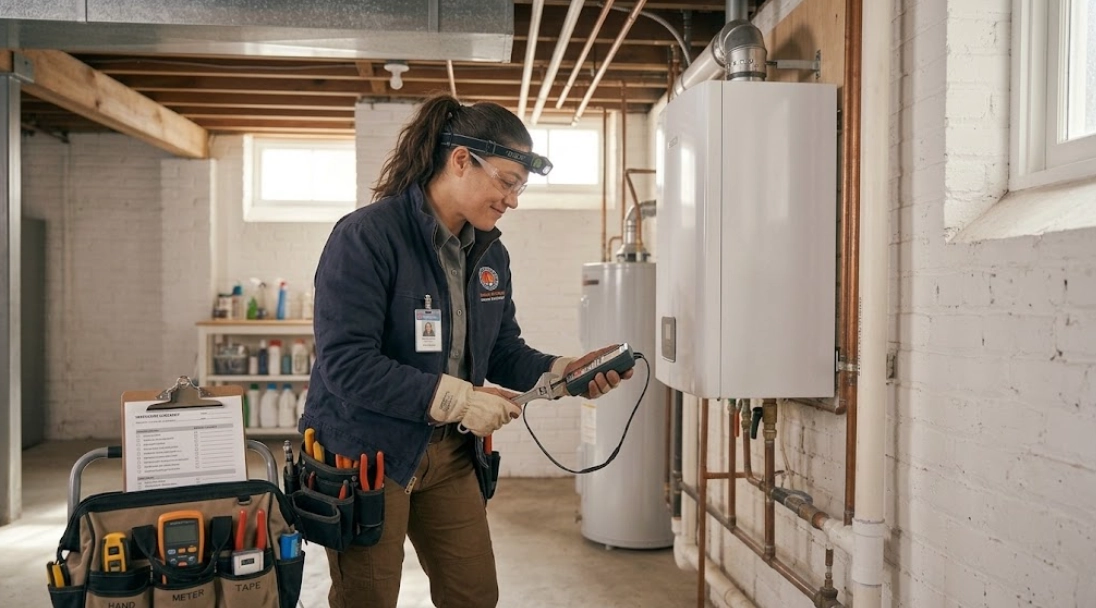
During freezing winter weather, no-heat calls are prioritized based on local technician availability in Middle Village and neighboring Queens communities. Our technicians carry diagnostic multimeters, pressure testing gauges, and universal replacement controls to identify electrical, gas, or hydronic faults directly during the initial visit.