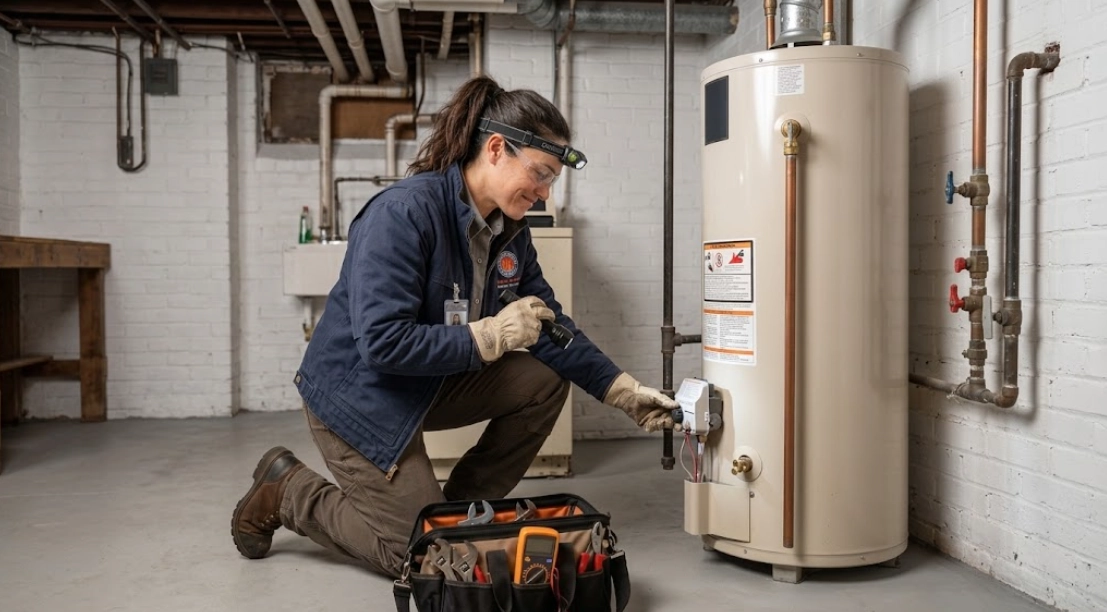
Dependable Water Heater Repair Middle Village Queens Homeowners Count On
Few household disruptions are as immediately frustrating as stepping into a morning shower only to be met with icy cold water. When hot water supplies dwindle or vanish altogether, timely water heater repair Middle Village Queens provides the fast, dependable diagnosis required to get hot water flowing smoothly through your faucets again.
Residential plumbing configurations across Middle Village vary widely. Many detached homes on streets near Eliot Avenue and attached dwellings along Metropolitan Avenue feature freestanding natural gas atmospheric water heaters, while properties with modern high-efficiency heating systems utilize indirect storage tanks paired directly with their central boiler.
Common Water Heater Warning Signs & Causes
Water heaters frequently exhibit warning signals before complete mechanical shutdown. Key symptoms include:
No Hot Water or Lukewarm Showers
On gas units, this points to an extinguished pilot light, a fouled thermocouple, or a failed electronic gas control valve. On electric units, burned-out heating elements or tripped reset buttons are the primary culprits.
Puddles Around the Heater Base
Leaking water can originate from a dripping temperature and pressure (T&P) relief valve, loose threaded unions, or catastrophic corrosion rupturing the internal steel tank lining.
Rumbling, Popping, or Sizzling Noises
Heavy mineral sediment builds up across the tank floor over time. As the burner heats the metal from underneath, trapped water boils under the sediment layer, producing loud popping sounds.
Rusty, Discolored Water or Odors
Reddish-brown hot water signals that the sacrificial anode rod has completely depleted, allowing municipal minerals to attack the steel tank walls directly.
How Water Heater Diagnostic Service is Performed
Our technicians follow a systematic diagnostic methodology to ensure safety and restore efficient operation:
Safety & Gas Supply Survey
We check the gas shutoff valve, inspect flexible supply lines for leaks with electronic gas detectors, and verify adequate drafting through the chimney flue collar to avoid carbon monoxide back-drafting.
Burner & Thermopile Testing
On gas heaters, the pilot orifice is cleared of lint and debris, millivolt output from the thermocouple or thermopile is measured under load, and burner flame patterns are evaluated.
Valves & Pressure Safety Inspection
We test the 150 PSI / 210°F temperature and pressure (T&P) relief valve to confirm it seats cleanly without weeping, inspect the thermal expansion tank air charge, and check the brass drain spigot.
Sediment Flushing & Anode Check
Where appropriate, sediment is flushed through the bottom drain valve to restore heat transfer efficiency, and the condition of the sacrificial anode rod is evaluated.
Indirect Water Heaters Connected to Central Boilers
In many Middle Village properties heated by hot water boilers, domestic hot water is generated via an indirect water heater. An indirect unit is an intensely insulated storage tank containing an internal stainless steel or copper heat exchanger coil.
Instead of burning fuel independently, hot water from your heating boiler circulates through the coil, heating household water with exceptional speed. When troubleshooting an indirect system, issues frequently involve the dedicated circulator pump, the aquastat relay, or zone valve controls rather than the tank itself.
Repair Versus Replacement: Which is the Smarter Choice?
Determining whether to repair or replace your water heater depends primarily on age and tank integrity:
When Repair Makes Sense
If your water heater is under 8 to 10 years old and the leak or failure is confined to an external component—such as a relief valve, thermocouple, gas valve, electric element, or brass pipe nipple—repair is cost-effective and restores full operation.
When Replacement is Unavoidable
If the inner steel tank has rusted through, water is actively leaking from underneath the outer metal casing, or the unit is beyond its 10-to-12-year design lifespan, replacement is essential to prevent severe basement flooding.
Factors Influencing Water Heater Repair Costs
Actual service expenses depend on system configuration and the exact parts required:
- Component Complexity: Replacing a standard mechanical thermocouple or temperature relief valve is straightforward, whereas replacing an electronic smart-control gas valve or power-vent blower fan incurs higher manufacturer component costs.
- Gas vs. Electric Configuration: Gas repairs involve combustion testing and burner servicing, while electric units require electrical continuity testing and dual-element troubleshooting.
- Basement Accessibility: Clear access to water shutoff valves and electrical panels facilitates rapid testing and repair.
Preventive Tips to Extend Water Heater Lifespan
- Annual Sediment Flush: Drain a few gallons of water from the bottom drain valve twice yearly to clear out accumulated mineral sediment and keep burner heat transferring efficiently.
- Inspect the Anode Rod Every 3 Years: Replacing the sacrificial magnesium anode rod before it completely corrodes prevents rust from attacking the steel tank lining.
- Test the T&P Relief Valve: Gently lift the test lever on your temperature and pressure relief valve once a year to ensure the valve seat hasn't calcified shut.
Related Mechanical & Heating Services
Boiler Repair Homepage
Complete central heating diagnostics, burner servicing, and low-water cutoff troubleshooting.
Steam Heat & Radiator Repair
Quiet noisy steam hammer, replace faulty radiator air vents, and fix leaking valve stems.
Boiler Replacement
High-efficiency gas boiler upgrades and seamless indirect water heater integrations.
Service Areas Directory
Explore coverage across Middle Village, Maspeth, Glendale, Rego Park, and Ridgewood.
Frequently Asked Questions: Water Heater Repair
Why did my water heater suddenly stop producing hot water?
On standard gas atmospheric water heaters, sudden loss of hot water usually stems from an extinguished pilot light, a dirty or defective thermocouple/thermopile, a tripped thermal switch, or a failed electronic gas control valve. On electric units, tripped circuit breakers, failed upper heating elements, or high-limit reset switches are common causes.
Can a leaking water heater tank be repaired?
If water is dripping from the temperature and pressure (T&P) relief valve, drain valve, or threaded copper dielectric unions, the leak can be repaired by replacing the valve or re-soldering connections. However, if water is weeping directly through the bottom steel tank casing or rust perforations, the internal glass lining has failed, necessitating complete tank replacement.
What is an indirect water heater and how does it connect to my boiler?
An indirect water heater is a highly insulated storage tank containing an internal heat exchanger coil. Rather than having its own dedicated gas burner, hot water from your central heating boiler is pumped through the internal coil to heat domestic tap water. It functions as a separate heating zone, offering exceptional recovery rates and energy efficiency.
Why is my hot water heater making rumbling or popping sounds?
Rumbling or popping sounds are caused by thick mineral sediment accumulating at the base of the tank. When the burner fires underneath, water trapped beneath this sediment layer boils into steam bubbles that pop violently through the calcified layer. Flushing the tank and replacing sacrificial anode rods can resolve this issue.