Specialized Radiator Repair Middle Village Queens Homeowners Trust
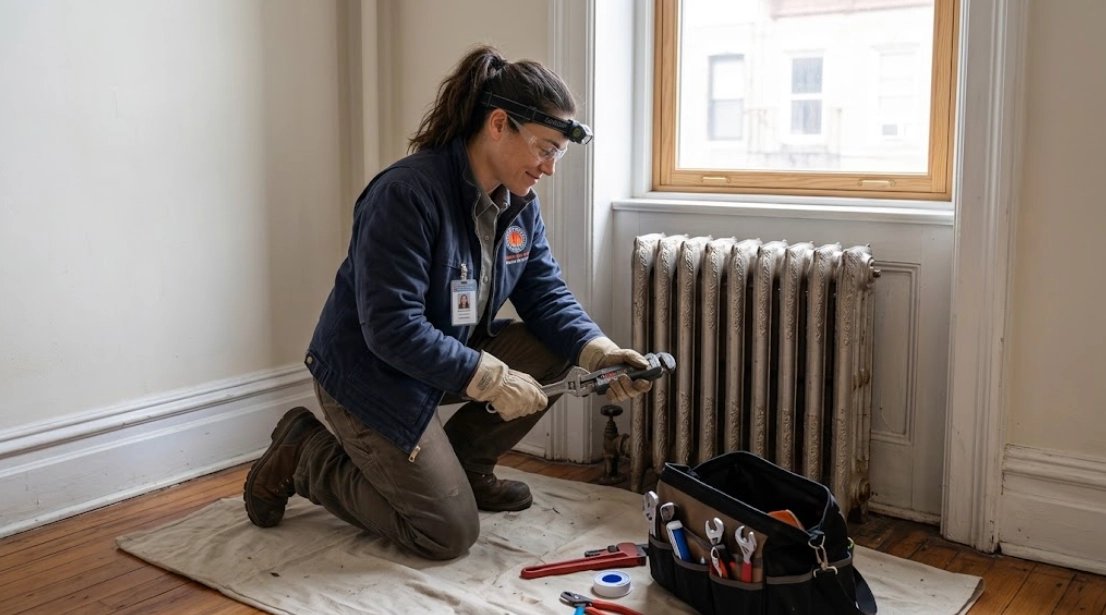
When cold weather sets in across Western Queens, cast-iron radiator systems provide unmatched radiant comfort. However, when steam valves hiss incessantly, pipes bang like sledgehammers, or second-story bedrooms remain freezing while the parlor overheats, experienced radiator repair Middle Village Queens is essential to restore quiet, balanced warmth.
Many charming brick and wood-frame homes built in Middle Village during the 1920s through 1950s—particularly along corridors near Metropolitan Avenue and residential blocks off Eliot Avenue—rely on single-pipe gravity steam heating. Understanding how steam and counter-flowing condensate coexist in the same pipe is the secret to resolving stubborn heating complaints.
Warning Signs and Common Causes of Radiator Malfunctions
Radiator heating problems typically stem from specific mechanical failures within individual valves, air vents, or physical pipe geometry:
Completely Cold Radiators
When the boiler is running but a radiator remains stone cold, the air vent is almost always seized shut. Air cannot escape, creating an invisible air lock that blocks incoming steam.
Violent Banging & Water Hammer
Loud knocking noises occur when steam traveling at 30 miles per hour collides with standing condensate pools. This happens when radiators sag backwards or pipe pitch has been lost due to house settling.
Spitting Vents & Floor Puddles
When water squirts from an air vent, either the vent float mechanism is broken, boiler water is surging from oily contamination, or the radiator slope prevents water from draining back to the riser.
Leaking Valve Stems & Spuds
Water stains on hardwood flooring around the shutoff handle point to worn-out graphite packing material around the valve stem or a loose ground-joint brass union spud.
How Professional Radiator Service is Performed
Resolving radiator issues requires delicate mechanical skill, especially when dealing with heavy cast iron and vintage brass threads:
Pitch & Slope Inspection
The technician places a digital level across the radiator body to ensure it pitches downward at least 1/4 inch toward the supply pipe, allowing gravity to return heavy condensate back to the boiler.
Air Vent Evaluation & Sizing
Old, painted, or mineral-clogged vents are removed. We install properly sized, fast-venting or thermostatic air valves calibrated to balance room heat distribution throughout the house.
Valve Stem Packing & Replacement
Leaking shutoff valves are disassembled, cleaned, and repacked with high-temperature Teflon or graphite packing. If the brass casing is cracked or corroded, the entire valve and spud assembly is rethreaded.
Operational Steam Testing
We fire the heating cycle to observe steam progression, confirm silent air expulsion, ensure complete radiator warming from end to end, and verify zero joint weeping under full operating pressure.
Repair Versus Radiator Replacement Considerations
Cast-iron radiators are remarkably durable heat emitters that can last over a century. In the vast majority of cases, repairing valves, shimming feet, and updating air vents fully restores performance.
However, physical replacement becomes necessary if a cast-iron radiator section has freeze-cracked, severe rust perforation has eaten through bottom seams, or a home renovation demands slender modern slim-line radiators or European panel convectors to reclaim usable floor area. If your heating distribution is obsolete, you may also consider comprehensive boiler replacement options.
Factors That Influence Radiator Repair Costs
Radiator repair costs depend on the physical condition of existing pipe unions and valve fittings:
- Degree of Pipe Corrosion: Replacing a standard air vent takes minimal time, whereas freeing a seized 1-1/4 inch spud nut that has been corroded in place for 50 years requires specialized spud wrenches, penetrants, and torch heat.
- Number of Balanced Zones: Rebalancing an entire two-family residence by retuning main line vents in the basement and individual radiator vents across all rooms involves systematic system tuning.
- Valve Repacking vs. Full Valve Replacement: Packing a valve gland on an accessible radiator is a straightforward repair, while replacing a deeply recessed valve beneath flooring requires careful woodwork protection.
Practical Homeowner Tips for Steam Radiators
- Never Keep Valves Half-Open: On one-pipe steam systems, keep the shutoff handle turned completely open or completely closed to avoid trapping water and creating deafening pipe banging.
- Check Radiator Pitch Annually: Ensure furniture, settling floors, or new carpet installations haven't tipped the radiator backwards away from the supply pipe.
- Keep Air Vents Clean: Never paint over the small air hole at the top or side of a radiator vent, as paint seals off air escape and leaves the radiator cold.
Explore Connected Heating & Plumbing Services
Boiler Repair Homepage
Troubleshoot central heating faults, low water conditions, and ignition problems at the heating plant.
Boiler Replacement
Upgrade to a modern, energy-efficient steam or hydronic heating boiler properly sized for Queens homes.
Water Heater Repair
Reliable diagnostic repairs and replacements for gas, electric, and boiler-connected indirect water heaters.
Service Areas
Explore service coverage in Middle Village, Maspeth, Glendale, Rego Park, and Ridgewood.
Frequently Asked Questions: Radiator Repair
Why is my Middle Village radiator staying completely cold while others are hot?
The most common culprit is a stuck or calcified radiator air vent. In a single-pipe steam heating system, steam cannot enter the radiator body until the trapped cold air inside is expelled through the vent. If the vent's internal float valve is corroded shut or painted over, air remains locked inside, preventing steam from entering. Other causes include a shut supply valve or an improper pipe slope.
How do you stop steam pipes and radiators from violently banging?
Banging—termed 'water hammer'—happens when fast-moving steam strikes standing condensate water. Technicians fix this by checking and shimming the radiator feet to ensure a continuous downward pitch toward the supply valve, clearing clogged vents, and verifying that the main boiler's near-piping isn't throwing wet steam into the risers.
Can a leaking radiator valve stem be repaired without replacing the whole radiator?
Yes. Most radiator leaks originate from degraded packing nuts or graphite gaskets inside the valve stem. Technicians can repack the valve stem or replace the spud and valve assembly without disturbing or discarding the heavy cast-iron radiator body.
Should steam radiator supply valves be turned halfway down to reduce heat?
No. On single-pipe steam systems, supply valves must be 100% open or 100% closed. Part-way throttling restricts returning condensate while steam tries to force its way in, producing loud knocking and spitting water from the air vent. To adjust room temperature, install thermostatic radiator valves (TRVs) or adjustable air vents.